
Separation and divorce can bring significant changes to family life, particularly when children are involved. Alongside the emotional challenges of ending a relationship, parents must make important decisions about living arrangements, school routines, holidays, and their children's ongoing care. Managing these responsibilities can be difficult, especially when communication has become strained.
A parenting plan can help make this process easier by setting out agreed arrangements and expectations for raising children across two households. It provides a practical framework for separated parents, helping to reduce misunderstandings and create greater consistency for their children.
At FMACS, we understand the challenges families face during separation. In this guide, we explain what a parenting plan is, what it should include, whether you need one, and how family mediation can help you reach arrangements that prioritise your child's wellbeing.
What Is a Parenting Plan?
A parenting plan is a written agreement between separated parents outlining how they will share parental responsibilities and make decisions about their children's upbringing. Sometimes described as a parenting agreement or co-parenting plan, it can cover where children will live, when they will spend time with each parent, how holidays will be arranged, and how parents will communicate.
Every family is different, so there is no single template that suits everyone. A parenting plan should reflect your children's ages, routines, education, and individual needs while providing clarity and consistency.
In England and Wales, a parenting plan is generally an informal agreement rather than a legally binding document. However, it can provide a valuable reference point for parents and help prevent misunderstandings. If you want your arrangements to become legally binding, seek independent legal advice about options such as a consent order.
What Should a Parenting Plan Include?
A practical parenting plan should address the main responsibilities involved in raising children across separate households. You can use a parenting plan template as a starting point, adapting it to suit your family's circumstances.
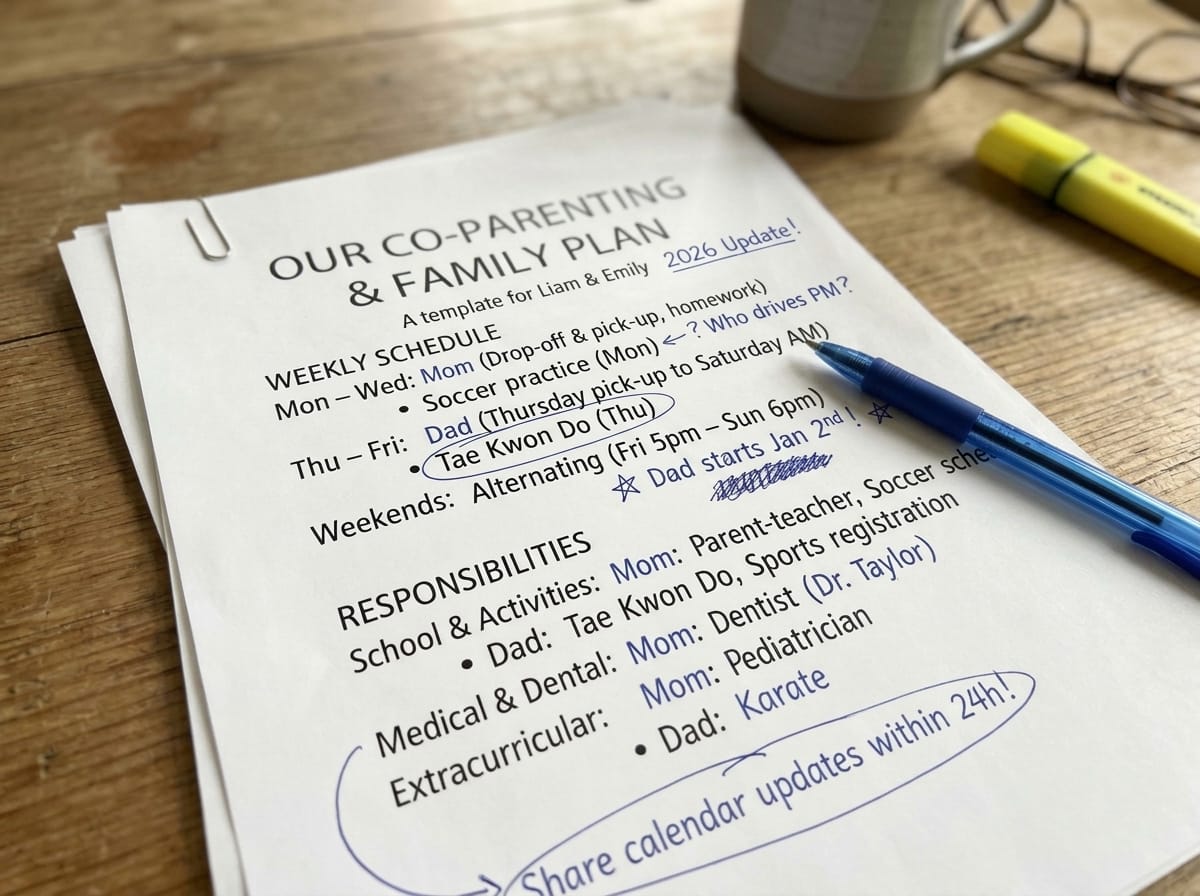
1. Living Arrangements and Time With Each Parent
Agreeing where children will live and when they will spend time with each parent is often one of the most important aspects of separation. Your plan might include weekly schedules, overnight stays, school collections, and handover arrangements.
Consider your children's ages, school commitments, friendships, and activities when establishing a routine. The aim is to provide stability while supporting meaningful relationships with both parents, where safe and appropriate.
2. School Holidays and Special Occasions
Birthdays, Christmas, and school holidays can become sources of disagreement if expectations are unclear. A parenting plan can establish how these occasions will be shared, whether holidays will alternate annually, and how much notice parents should give when making plans.
If either parent intends to take the children abroad, agree how travel arrangements will be discussed and ensure any relevant legal requirements or existing court orders are followed.
3. Communication Between Parents
Effective communication helps parents manage everyday responsibilities and make important decisions. Your parenting agreement can establish how you will share updates about school, healthcare, activities, and changes to routines.
You might agree to communicate by email or telephone, keep messages focused on the children, and discuss proposed changes in advance. If direct communication is difficult, family mediation can help you explore more constructive ways to manage disagreements.
4. Education, Healthcare and Daily Routines
Consider how you will share school reports, attend parents' evenings, manage medical appointments, and make important decisions about your children's education and health.
You may also wish to agree on practical routines covering homework, bedtimes, medication, school uniforms, and extracurricular activities. While both households do not need identical rules, agreeing on key expectations can help children adjust to their new circumstances.
5. Managing Disagreements and Future Changes
Children's needs and family circumstances change over time. A parenting plan should explain how you will review arrangements, request changes, and resolve disagreements.
Agreeing to discuss issues calmly, provide reasonable notice, and seek support when necessary can help prevent misunderstandings from escalating. Flexibility is important, but any changes must also respect existing court orders and safeguarding requirements.
Do I Need a Parenting Plan After Separation?
You are not generally required to have a written parenting plan after separation in England and Wales. If you and your former partner agree on child arrangements, you can choose to keep them informal or record them in writing.
However, a parenting plan can be particularly helpful if you are unsure how to divide time with your children, disagree about holidays or handovers, or find communication difficult. It can also help establish consistent routines and clarify responsibilities across two households.
The UK Government provides an online service to help separated parents create a child arrangements plan. Visit the official GOV.UK guidance for further information.
Remember that an informal parenting plan does not override an existing court order. If you need to change a court-ordered arrangement, seek appropriate legal advice.

What Are the Benefits of a Parenting Plan?
A parenting plan can benefit parents and children by providing structure during an uncertain period.
Greater stability for children: Predictable routines can help children understand what to expect and adjust to changes in family life.
Reduced conflict: Clear agreements about responsibilities and schedules can prevent misunderstandings and repeated arguments.
Improved communication: Establishing how parents exchange information encourages more constructive discussions about their children's needs.
Better co-parenting: A plan helps parents focus on their shared responsibilities rather than disagreements arising from the end of their relationship.
Flexibility as children grow: Regular reviews allow arrangements to adapt as children's needs, school commitments, and family circumstances change.
A parenting plan cannot eliminate every challenge, but it can provide a practical foundation for cooperation and help children feel supported by both parents.
How Family Mediation Can Help You Create a Parenting Plan
It is not always possible for separated parents to agree on every aspect of their children's upbringing. Differences in expectations, communication difficulties, and unresolved conflict can make discussions challenging.
Family mediation offers a structured way to explore these issues. An independent, impartial mediator helps parents communicate, identify areas of disagreement, and consider practical solutions. The mediator does not take sides or impose decisions; parents remain responsible for reaching their own agreement.
Family mediation can help you:
- Agree on clear child arrangements and holiday schedules.
- Improve communication and reduce unnecessary conflict.
- Focus on your child's needs and wellbeing.
- Establish responsibilities for everyday care and important decisions.
- Explore ways to manage future changes and disagreements.
If an agreement is reached, parents can record the arrangements in a parenting plan and seek legal advice about formalising them where appropriate.
Mediation is not suitable for every situation. Where there are concerns about domestic abuse, coercion, or immediate safeguarding risks, specialist support and legal advice may be necessary.
To find out more, explore our family mediation services and discover how we can help you work towards practical arrangements for your family.
Speak to Our Family Mediation Specialists
At FMACS, our family mediation specialists support separated parents in resolving disagreements and establishing workable child arrangements. Whether you are creating a parenting plan for the first time or struggling to agree on existing arrangements, we can help you explore a constructive way forward.
Call us on 0330 113 0005 or visit our contact page to find out more about our family mediation services.
Frequently Asked Questions
Yes. Parents can create their own parenting plan if they agree on the arrangements. A parenting plan template can help you organise details such as living arrangements, holidays, communication, and parental responsibilities.
In England and Wales, a parenting plan is generally an informal agreement and is not automatically legally binding. If you want legally binding arrangements, seek independent legal advice about whether a consent order is appropriate.
The terms are often used interchangeably. Both generally describe arrangements agreed between parents about their children's care and upbringing. The important consideration is what the agreement covers and whether it has been formally approved by a court.
Yes. Parents can agree to update an informal parenting plan as their circumstances or children's needs change. Existing court orders must still be respected, and legal advice may be needed if a court-ordered arrangement requires amendment. be changed?
Family mediation may help you discuss disagreements and explore practical solutions, provided mediation is appropriate for your circumstances. If agreement remains impossible, seek independent legal advice about the options available.
Yes. Family mediation can provide a structured environment for discussing child arrangements and finding constructive ways to communicate. However, it may not be appropriate where there are safety concerns or coercive behaviour.