We are living in uncertain and worrying times. Children are particularly vulnerable and may not exactly what is going on and how it has affected all our lives. They will have more time on their hands as schools have closed and therefore will be requiring more attention.
For separated parents, the added stress of not being able to see their children can cause anxiety and conflict. We are receiving calls daily, asking what can be done when the other parent is refusing to allow the children to visit.
The Government have issued guidelines and urges parents to consider the risks of moving children between homes in preventing further spread of the virulent disease, COVID-19.
If neither parent nor child is showing symptoms of the virus or self-isolating, children of separated parents are still allowed to stay with either of them.
Government guidance on staying at home says: "Where parents do not live in the same household, children under 18 can be moved between their parents' homes."
However, the Family Division of the High Court has said that, in England and Wales, if one parent is worried that moving their child would be going against public health advice, they may "exercise their parental responsibility and vary the arrangement to one that they consider to be safe", even if the other parent does not agree.
Where this is the case, family courts will expect parents to allow contact by video chat or phone.
Guidelines (Full details can be found here) have now been extended and defined more clearly.
President of the Family Division and Head of Family Justice, the Rt. Hon. Sir Andrew McFarlane, set out in his statement the following points:
- Parental responsibility for a child who is the subject of a Child Arrangements Order [‘CAO’] made by the Family Court rests with the child’s parents and not with the court.
- The country is in the middle of a Public Health crisis on an unprecedented scale. The expectation must be that parents will care for children by acting sensibly and safely when making decisions regarding the arrangements for their child and deciding where and with whom their child spends time.
Parents must abide by the ‘Rules on Staying at Home and Away from Others’ issued by the government on 23 March [‘the Stay at Home Rules’]. In addition to these Rules, advice about staying safe and reducing the spread of infection has been issued and updated by Public Health England and Public Health Wales [‘PHE/PHW’]. - The Stay at Home Rules have made the general position clear: it is no longer permitted for a person, and this would include a child, to be outside their home for any purpose other than essential shopping, daily exercise, medical need or attending essential work.
- Government guidance issued alongside the Stay at Home Rules on 23rd March deals specifically with child contact arrangements. It says:
“Where parents do not live in the same household, children under 18 can be moved between their parents’ homes.”
This establishes an exception to the mandatory ‘stay at home’ requirement; it does not, however, mean that children must be moved between homes. The decision whether a child is to move between parental homes is for the child’s parents to make after a sensible assessment of the circumstances, including the child’s present health, the risk of infection and the presence of any recognised vulnerable individuals in one household or the other. - More generally, the best way to deal with these difficult times will be for parents to communicate with one another about their worries, and what they think would be a good, practical solution. Many people are very worried about Coronavirus and the health of themselves, their children and their extended family. Even if some parents think it is safe for contact to take place, it might be entirely reasonable for the other parent to be genuinely worried about this.
- Where parents, acting in agreement, exercise their parental responsibility to conclude that the arrangements set out in a CAO should be temporarily varied they are free to do so. It would be sensible for each parent to record such an agreement in a note, email or text message sent to each other.
- Where parents do not agree to vary the arrangements set out in a CAO, but one parent is sufficiently concerned that complying with the CAO arrangements would be against current PHE/PHW advice, then that parent may exercise their parental responsibility and vary the arrangement to one that they consider to be safe. If, after the event, the actions of a parent acting on their own in this way are questioned by the other parent in the Family Court, the court is likely to look to see whether each parent acted reasonably and sensibly in the light of the official advice and the Stay at Home Rules in place at that time, together with any specific evidence relating to the child or family.
- Where, either as a result of parental agreement or as a result of one parent on their own varying the arrangements, a child does not get to spend time with the other parent as set down in the CAO, the courts will expect alternative arrangements to be made to establish and maintain regular contact between the child and the other parent within the Stay at Home Rules, for example remotely – by Face-Time, WhatsApp Face-Time, Skype, Zoom or other video connection or, if that is not possible, by telephone.
The key message should be that, where Coronavirus restrictions cause the letter of a court order to be varied, the spirit of the order should nevertheless be delivered by making safe alternative arrangements for the child.
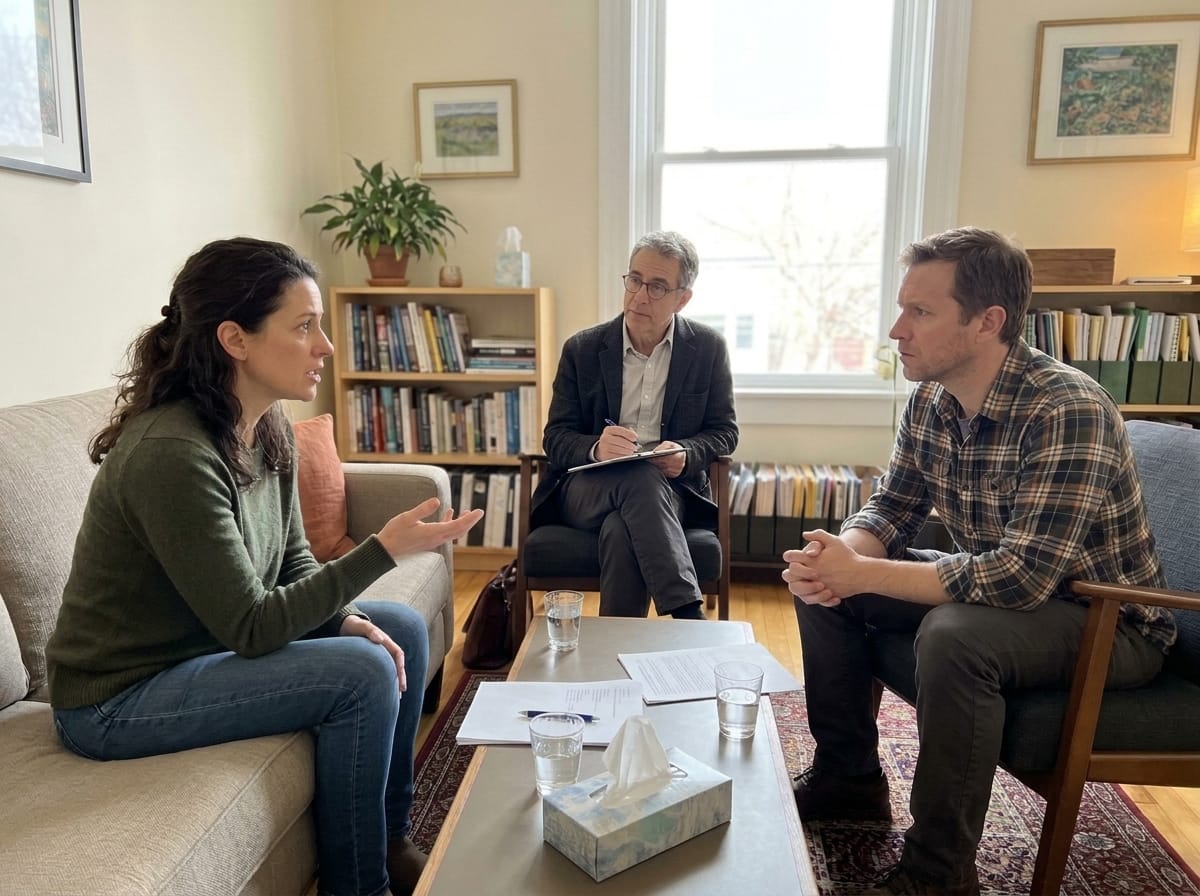
However, conflict still arises between separated parents and many turn to mediation as a way resolving their differences. As many mediation practices close due to the restrictions on social distancing, the entire Family Mediation & Counselling Service (FMACS) has gone totally online with support staff and mediators working from their homes. The needs of clients is more urgent, as many people are being forced to stay at home without any contact with their kids. Immediate appointments are being offered and the other parent is contacted within 2 hours and a mediation can be arranged for the same day, in many cases, in an attempt to defuse potentially volatile situations.
Phil (not his real name) contacted FMACS on Tuesday morning and had an online meeting with a family mediator two hours later. During this time, his ex-partner Karen was contacted and asked if would be willing to mediate with Phil later that day. She agreed and the mediator contacted her immediately after Phil's appointment had ended. Another two hours later and a meeting between Phil, Karen and the mediator took place. On this occasion, both were able to express their concerns and reach an amicable solution to enable Phil to see his kids. FMACS slashed their fees to help accommodate a peaceful and positive outcome.
If you need help during these difficult times, a dedicated helpline has been set up and is available daily between 11am and 5pm, please call: 0247 590 1061