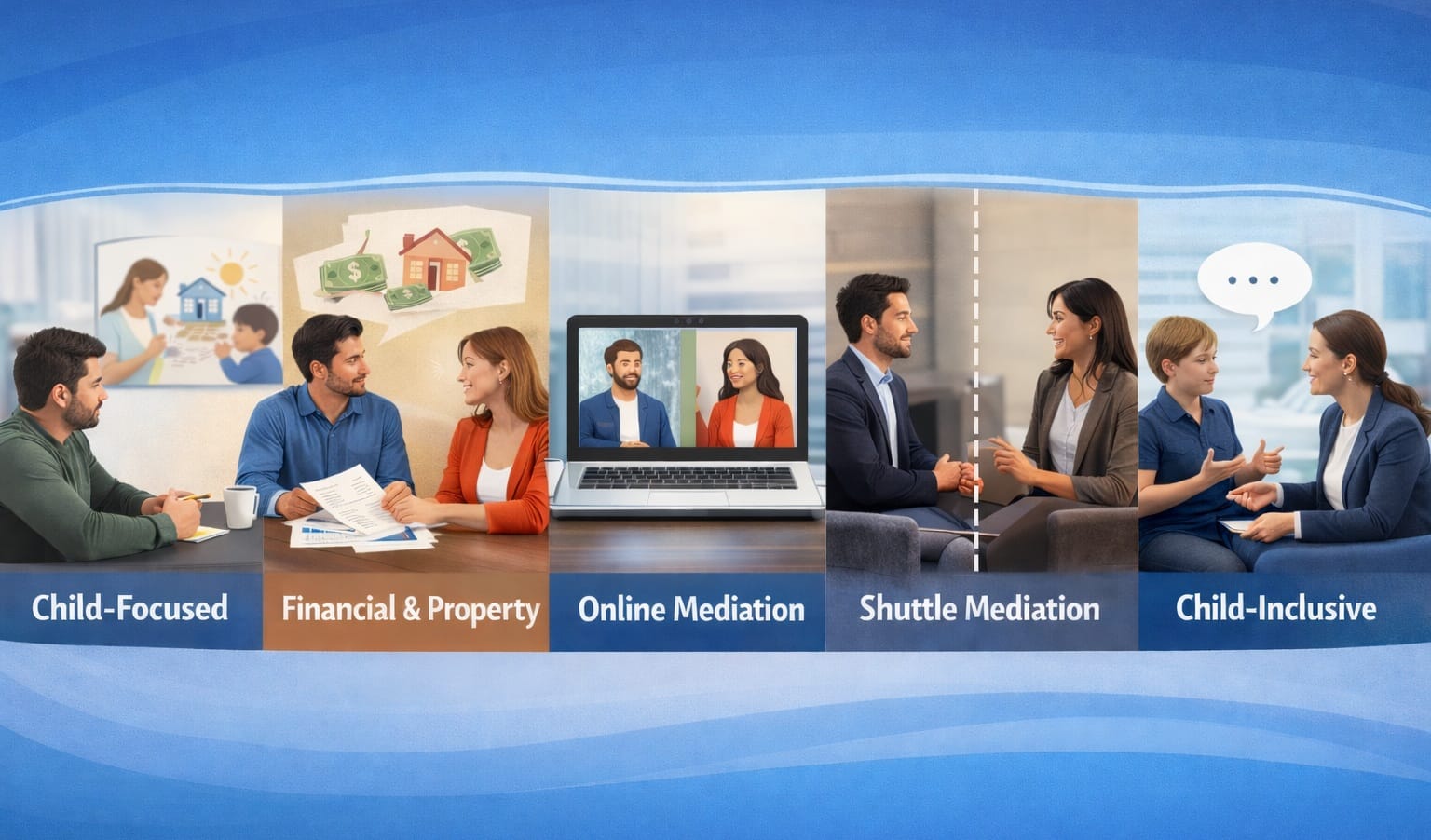
Family mediation is one of the most effective ways to resolve disputes during separation or divorce without going to court. It provides a structured and supportive process where both parties can work towards fair agreements around children, finances, and ongoing responsibilities. However, many people are surprised to learn that there are different types of family mediation, each tailored to particular circumstances. Understanding these options can help you choose the approach that best suits your situation and ensures your mediation sessions are as productive as possible.
In this guide, we’ll explain the different types of family mediation available in the UK and how they can support you during separation.
Child-Focused Mediation
Child-focused mediation is designed to help parents make arrangements for their children following separation. Discussions often cover living arrangements, contact schedules, education, holidays, and other aspects of daily life. The mediator’s role is to keep the conversation centred on the child’s wellbeing. Rather than focusing on parental disagreements, the aim is to reach arrangements that provide children with stability, security, and the opportunity to maintain strong relationships with both parents. This type of mediation is often the first step for separating parents who want to avoid court proceedings and keep their children shielded from conflict.
Financial Mediation
Financial matters can be some of the most complex and emotionally charged aspects of separation. Financial mediation helps couples address issues such as property, savings, debts, pensions, and ongoing financial support. The process involves sharing financial information openly and working towards agreements that are fair and sustainable for both parties. The mediator ensures that discussions remain focused and constructive, helping you explore options without escalating conflict. While financial mediation is not a substitute for legal or financial advice, it provides a structured framework for reaching practical agreements outside of court.
Property Mediation
Property is often one of the biggest assets in a relationship, and deciding what happens to the family home can be particularly difficult. Property mediation focuses specifically on issues relating to ownership, mortgages, selling or retaining the property, and housing arrangements for children. Through mediation, couples can explore different solutions, such as one partner buying out the other’s share, agreeing to sell the property, or making temporary arrangements until the children reach a certain age. This type of mediation helps avoid lengthy and costly property disputes in court while keeping decisions practical and child-focused.
Online Family Mediation
Online family mediation is becoming increasingly popular, especially for parents who live in different locations or prefer not to meet in person. Sessions are conducted via video platforms such as Zoom, offering the same structure and confidentiality as face-to-face mediation. Many people find online mediation less intimidating, and it often provides greater flexibility for scheduling. It can also help reduce tension by allowing parents to join from separate environments rather than sharing the same physical space. Online mediation can be used for both child-focused and financial matters, making it a versatile option for many families.
Shuttle Mediation
In some cases, parents find it too difficult to sit in the same room (or the same online meeting). Shuttle mediation allows each parent to remain in separate rooms or online breakout spaces, with the mediator moving between them to facilitate discussion. This approach can be particularly helpful where emotions are high or there is a history of conflict. Shuttle mediation ensures both voices are heard while reducing the risk of confrontation. While shuttle mediation may take a little longer, it often makes it possible to reach agreements that would otherwise feel impossible.
Child-Inclusive Mediation
Child-inclusive mediation gives children a direct voice in the process. With parental consent, a specially trained mediator speaks with the child in a safe and supportive way. The child’s views are then shared (with their permission) during the mediation session with parents. This type of mediation is not about children making decisions but about ensuring their perspective is taken into account. It can be especially helpful with older children or teenagers, who may want to have input into arrangements that affect their daily lives. Child-inclusive mediation demonstrates to children that their feelings matter, which can reduce anxiety and build trust during a difficult time.
Why Choose Mediation Over Court?
All types of family mediation share one key goal: helping families resolve disputes fairly, respectfully, and without the stress of court proceedings. Mediation is usually quicker, less expensive, and less adversarial than going through the courts. More importantly, mediation encourages cooperation and helps preserve relationships — something that is particularly important when children are involved. At FMACS, our experienced mediators are trained in a range of approaches and will guide you towards the type of mediation best suited to your circumstances.
Speak to Our Family Mediation Specialists
Whether you need help with child arrangements, financial matters, or communication, our highly trained mediators can support you in finding fair and practical solutions.
Call us today on 0330 113 0005 or get in touch via our contact page to arrange your initial consultation. Our service is confidential, professional, and designed to help your family move forward positively.
Frequently Asked Questions
It depends on your circumstances. If you need to agree on arrangements for children, child-focused mediation may be best. For financial or property disputes, financial mediation or property mediation will be more appropriate. Your mediator will advise you on the most suitable approach.
No. Child-inclusive mediation is an option where children are old enough to express their views and both parents agree. It can be valuable, but it is not always required. The decision depends on what is best for the child.
Yes. Many families use more than one type of mediation as their needs change. For example, you may start with child-focused mediation and later move on to financial mediation. The process is flexible and tailored to your situation.
Not at all. Shuttle mediation may take longer, but it can be highly effective in reducing conflict and enabling progress. Many families reach agreements through shuttle mediation that they could not have achieved face-to-face.
The number of sessions depends on the complexity of your situation and the type of mediation you choose. Some families resolve child arrangements in just one or two sessions, while financial or property issues may take several meetings. Your mediator will guide you on what to expect.
Yes. While agreements reached in mediation are not automatically legally binding, they can be made official through a solicitor and turned into a legally binding consent order. This gives both parties certainty and ensures the agreements are enforceable.
The process is the same as face-to-face mediation, but sessions are held via video call. Online mediation can be used for child arrangements, financial discussions, or even shuttle mediation, making it a flexible option for many families.